

Precision Gearhead Update 2026-W20: Sourcing and Inertia Risk
Weekly buyer brief on 2026 policy and supply signals, with landed-cost scenarios and RFQ control gates for precision gearhead sourcing.
One-line decision: For Q2-Q3 2026 programs, treat precision gearhead selection as a joint engineering-procurement decision: lock inertia ratio and backlash class with trade-compliance data at RFQ gate, not after first quote.
Published and scope: Published on May 10, 2026. Coverage is United States, European Union, and Asia-Pacific industrial automation sourcing. This page is not legal or tariff-classification advice.
Need to act this week? Run a fast inertia pre-check, confirm interface assumptions in the NEMA compatibility hub, and send a complete RFQ pack through Contact.
Executive Summary
In the last 30 days, three signals materially changed how buyers should source precision gearheads:
- United States: Section 232 updates published in the Federal Register shifted duty logic toward full customs value for covered classes, with April 6, 2026 effective timing and April 29 technical corrections.
- European Union: The Commission announced political agreement on a new steel measure with a 50% out-of-quota duty and melt-and-pour traceability path, targeting July 1, 2026 entry into force.
- APAC supply signal: Nabtesco's April 30, 2026 Q1 materials showed precision reduction gear demand recovery in key robotics markets and an H2 product-delivery milestone.
For automation OEMs and integrators, this is not just market news. It changes:
- how you compare “same-ratio” offers,
- how you sequence spec freeze vs sourcing,
- and which documentation must be required before PO release.
What Changed (Last 30 Days)
What Changed (Last 30 Days)
| Date | Region | Primary Source | What Changed | Buyer Impact |
|---|---|---|---|---|
2026-04-09 | US | Federal Register, Proclamation 11021 | Section 232 treatment updated | Landed-cost deltas can widen across equivalent gearhead specs |
2026-04-06 | US | Federal Register | Effective time stated | Quote assumptions before/after timestamp may not be comparable |
2026-04-29 | US | Federal Register notice 2026-08297 | HTSUS technical corrections | Import classification workflow risk increased |
2026-04-13 | EU | European Commission | Political agreement on new steel measure | Steel-linked upstream cost burden rises |
2026-04-30 | APAC | Nabtesco FY2026 Q1 | Precision reduction gear demand recovery | Lead-time and allocation risk can tighten |
2026-05-05 | US | U.S. Census/BEA | March trade release published | Avoid stale baseline assumptions in Q2 sourcing models |
Visual 1: Policy-to-Procurement Timeline (Apr-Jul 2026)
Mobile quick read:
- Apr 6, 2026: U.S. effective timing starts.
- Apr 9 and Apr 29, 2026: U.S. publication plus technical corrections.
- Apr 13 and target Jul 1, 2026: EU agreement to implementation window.
- Apr 30, 2026: APAC supplier-demand signal points to possible lead-time pressure.
Why It Matters for Precision Gearhead Decisions
1) Inertia ratio and landed-cost are now coupled earlier
Historically, many teams did this sequence:
- pick ratio/backlash class,
- receive quote,
- let trade/compliance team adjust.
That sequence is now too late for many programs. If duty treatment is applied on full customs value for covered import classes, premium choices (low backlash grade, custom flange adapter, higher rigidity options) can materially shift landed cost.
2) Flange/interface variants now carry documentation cost
For buyers comparing two “equivalent torque” offers, hidden difference is often interface execution:
- flange revision control,
- motor pilot tolerance,
- adapter content/material declaration,
- classification and origin declarations.
3) Lead-time risk is no longer only a factory-capacity story
Lead-time volatility now has three drivers:
- policy effective dates and technical corrections,
- documentation and classification cycles,
- demand rebound in precision reduction gears.
Buyer Impact Matrix (Engineering + Procurement)
Buyer Impact Matrix (Engineering + Procurement)
| Decision Lever | Old Habit | 2026-W20 Required Practice | Failure Mode if Ignored |
|---|---|---|---|
Inertia ratio target | Validate after quote | Set target band before RFQ | Retuning loops and missed FAT dates |
Backlash class | Select by catalog only | Tie to achievable tuning window | Overpay or underperform axis stability |
Flange compatibility | Check late in CAD freeze | Request drawing rev at first review | Rework on coupling/mounting parts |
Duty/compliance | Hand off after shortlist | Run parallel compliance screen | False low price winner at PO stage |
Origin traceability | Ask only when requested | Collect statements as RFQ attachments | Clearance delays and reclassification risk |
Lead-time promise | Accept single ETA | Ask for min/typical/p95 delivery | Build plan slips under demand spikes |
Multi-region sourcing | One-source for speed | Keep one alternate qualified path | No recovery path when policy changes |
Quote comparison | Compare EXW unit price only | Compare landed cost + risk | Procurement-engineering misalignment |
Scenario Model: How Landed-Cost Ranking Can Flip
Teams still comparing EXW unit price only are likely to mis-rank suppliers in this policy window.
Illustrative RFQ scenario (single ratio class, same nominal performance):
- Supplier A EXW quote: USD 248
- Supplier B EXW quote: USD 236
- annual demand: 2,000 units
Price-only view says B saves USD 24,000 per year.
Now add risk-adjusted factors observed in Q2 2026 workflows:
- additional documentation handling and broker rework for B: USD 8,600
- probable delay exposure from incomplete declaration cycle (estimated 1.5 weeks at USD 11,000/week): USD 16,500
- engineering revalidation due to interface declaration mismatch: USD 5,400
Total extra risk cost on B path: 8,600 + 16,500 + 5,400 = USD 30,500.
Net effect:
- price-only advantage of B: USD 24,000
- extra risk-adjusted cost on B: USD 30,500
- lifecycle delta: B becomes USD 6,500 more expensive
This is why landed-cost scenario checks must be completed before shortlist lock.
Landed-Cost Scenario Test (Illustrative)
| Cost block | Supplier A | Supplier B | Decision impact |
|---|---|---|---|
EXW annual purchase | USD 496,000 | USD 472,000 | B lower on price-only view |
Documentation and broker rework | USD 2,000 | USD 8,600 | B higher execution burden |
Delay-risk exposure | USD 5,500 | USD 16,500 | B higher schedule risk |
Engineering revalidation | USD 1,800 | USD 5,400 | B higher integration churn |
Risk-adjusted annual total | USD 505,300 | USD 502,500 + higher variance | Require alternate path before award |
Trigger Matrix for June-July 2026 RFQ Waves
Use clear thresholds to escalate decisions before schedule slip compounds.
Policy and Execution Trigger Matrix
| Trigger | Threshold | Owner | Immediate action |
|---|---|---|---|
Quote assumption timestamp mismatch | Any quote basis before current rule baseline window | Procurement lead | Reissue RFQ assumptions and refresh landed-cost model |
Lead-time p95 widening | Increase over 20 percent vs prior week | Supply-chain planner | Activate alternate source pre-qualification |
Compliance packet gaps | Missing origin or classification statement at shortlist stage | Trade compliance owner | Block commercial freeze until closure |
Interface revision drift | Supplier response references obsolete drawing rev | Mechanical lead | Pause comparison and enforce revision-aligned re-quote |
Single-source dependency | No practical alternate for critical ratio class | Program manager | Escalate to dual-path sourcing decision |
Related Decision Pages for RFQ Workflows
- How to Match a Servo Motor to a Planetary Gearhead: Inertia Ratio Explained
- Inline vs Right-Angle Gearhead: Space, Torque, and Integration Tradeoffs
- The Real Cost of Cheap Gearheads: Why Precision Matters in Production
- Products overview for ratio-family preselection
- OEM quality and delivery control
- Blog category archive for weekly buyer updates
Visual 2: RFQ Gate Flow for Precision Gearhead Programs
Mobile quick read:
- Define load and motion assumptions.
- Set ratio and backlash windows.
- Freeze interface drawing revision.
- Run compliance and landed-cost checks in parallel.
- Approve shortlist only after both gates pass.
Action Checklist (Who Should Act Now)
Automation OEM engineers
- Re-run inertia-ratio screening on all active axes entering RFQ in May-June 2026.
- Add backlash class as a controlled variable in design reviews, not a late commercial option.
- Require interface drawing revision lock before supplier final comparison.
Machine builders and system integrators
- Split RFQ package into two gates: technical fit gate and trade/compliance gate.
- Build one alternate source path per critical frame size or ratio family.
- Add a “documentation completeness” criterion before quote acceptance.
Procurement managers
- Compare suppliers on landed-cost scenarios, not EXW price only.
- Ask for effective-date assumptions used in each quote (especially around April 2026 rule changes).
- Track lead-time as range (best/typical/stress), not single promised date.
Risks, Constraints, and Evidence Gaps
- Classification detail risk: This page is a buyer decision brief, not legal advice; product-level classification can differ by build details and declarations.
- Scope boundary: EU April 2026 measure is steel-focused; impact to a specific gearhead SKU depends on upstream metal path and import route.
- Supplier-signal limitation: Nabtesco is an important but single-vendor signal; treat it as directional, then verify with your actual supplier set.
- Data revision risk: U.S. trade statistics in this window include announced revision schedules; avoid long-term conclusions from one monthly print alone.
- Standards signal gap (ISO/ANSI/OSHA): Within this 30-day window, we did not find a same-magnitude new standard/regulatory change directly rewriting precision gearhead specification criteria. Keep monitoring, but do not fabricate urgency where evidence is weak.
30-60 Day Execution Plan
30-60 Day Execution Plan
| Window | Engineering Output | Procurement Output | Governance Check |
|---|---|---|---|
Next 7 days | List critical axes by sensitivity | Re-open active RFQs with compliance annex | Program manager approves high-risk list |
Day 8-21 | Complete shortlist with tolerances | Run landed-cost scenario for each | Cross-functional review (eng + procurement) |
Day 22-45 | Freeze interface revisions | Lock document completeness checklist | Pre-PO readiness gate |
Day 46-60 | Validate pilot builds and tuning | Confirm allocation and alternate source | Executive sign-off on sourcing risk |
Weekly RFQ Control Template (May-July 2026)
Use this template for cross-functional control during policy-volatility windows.
Week:
Program:
Facilitator:

1) Policy and assumption check
- Quote assumption date aligned to latest rule baseline? Y/N
- Any new correction/notice this week? Y/N

2) Technical fit check
- Ratio/backlash target unchanged? Y/N
- Interface revision lock status:

3) Compliance check
- Origin/classification statements complete? Y/N
- Missing declaration items:

4) Landed-cost scenario check
- Base scenario result:
- Stress scenario result:
- Delay scenario result:

5) Sourcing resilience
- Alternate source qualified? Y/N
- Critical ratio classes with single-point risk:

6) Decision
- Continue / Hold / Re-open RFQ
- Top 3 actions with owners and due dates
Field Notes from Buyer Calls (Anonymized)
Q: We already have approved suppliers. Why do we need extra compliance checks now?
Because policy-window shifts can change landed-cost and document burden even when supplier names stay the same.
Q: One quote is clearly cheaper on EXW. Can we skip scenario modeling for speed?
That shortcut frequently backfires when declaration and delay risk are not priced in. A quick three-scenario model is usually enough to avoid false winners.
Q: We cannot qualify a second source in time. What is the minimum fallback?
Keep one conditional alternate path for critical ratio classes, even if initial volume is small.
Anti-Patterns to Avoid
- comparing offers on EXW unit price only during policy-volatility windows
- freezing shortlist before compliance packet completeness is verified
- assuming last quarter lead-time behavior still applies without weekly refresh
Failure Postmortem: Cheapest Quote Became Highest-Risk Award
Observed pattern during a policy-change window:
- buyer selected the lowest EXW quote before full compliance packet review
- classification and declaration gaps surfaced after internal approval
- landed-cost and timeline assumptions were reopened mid-cycle
- shortlist confidence dropped and RFQ had to be reissued
What prevented repeat in later rounds:
- shortlist freeze moved behind compliance completeness gate
- three-scenario landed-cost review required for every finalist
- alternate source path kept active for critical ratio classes
Sources
-
Strengthening Actions Taken To Adjust Imports of Aluminum, Steel, and Copper Into the United States
Organization: Federal Register / Executive Office of the President
Date: 2026-04-09 (Proclamation dated 2026-04-02; key provisions effective 2026-04-06 12:01 a.m. EDT)
URL: https://www.federalregister.gov/documents/2026/04/09/2026-06960/strengthening-actions-taken-to-adjust-imports-of-aluminum-steel-and-copper-into-the-united-states -
Notice of Technical Corrections to the Harmonized Tariff Schedule of the United States for Duties Imposed by Presidential Proclamation 11021
Organization: Federal Register / U.S. Department of Commerce, BIS
Date: 2026-04-29 (effective for covered entries from 2026-04-06)
URL: https://www.federalregister.gov/documents/2026/04/29/2026-08297/notice-of-technical-corrections-to-the-harmonized-tariff-schedule-of-the-united-states-for-duties -
Commission welcomes political agreement on new EU steel measure (IP/26/803)
Organization: European Commission
Date: 2026-04-13
URL: https://ec.europa.eu/commission/presscorner/detail/en/ip_26_803 -
Results Briefing Material for FY2026 Q1
Organization: Nabtesco Corporation
Date: 2026-04-30
URL: https://www.nabtesco.com/cms/wp-content/uploads/Results_Briefing_Material_for_FY2026_Q1e.pdf -
U.S. International Trade in Goods and Services (FT-900 release cycle, March 2026 release reference)
Organization: U.S. Census Bureau / U.S. Bureau of Economic Analysis
Date: 2026-05-05
URL: https://www.census.gov/foreign-trade/Press-Release/current_press_release/ft900.pdf
Last verified: May 11, 2026.
Final CTA
If you want a program-level review, email [email protected] or message WhatsApp +8618857971991.
To get a usable first response, include:
- application and axis function
- duty cycle and ambient conditions
- drawing revision and interface constraints
- target timeline and forecast quantity
FAQ
Should we delay all purchases until policies settle?
No. Delay can be more expensive than controlled execution. Move forward with staged RFQ gates and explicit scenario assumptions.
Do these changes affect servo and stepper projects equally?
Both are affected on sourcing/compliance terms. Servo-heavy projects usually show higher sensitivity to inertia and backlash choices, so early technical gating is even more important.
How many suppliers should be qualified for a critical ratio class?
At least two practical source paths (primary + alternate) for critical axes is a reasonable baseline in this policy window.
Is low backlash still worth paying for?
Yes when the motion profile and tuning target require it. The key change is to evaluate low-backlash value with landed-cost and compliance exposure together.
What should be added to the first RFQ email now?
Include motion profile assumptions, ratio/backlash target, flange drawing revision, requested metal-origin/compliance statements, and required delivery window format.
What is the fastest way to reduce integration risk this quarter?
Use a dual gate before PO: technical-fit pass plus compliance/landed-cost pass. Most downstream quote churn comes from skipping one of these gates.
For execution support, you can combine the Inertia Matching Calculator, NEMA compatibility pages, and Contact for RFQ package review.
Author

Categories
More Posts
Planetary vs. Strain Wave Gearheads in Cobots: The Cost and Stiffness Trade-off
A procurement and engineering guide comparing strain wave (harmonic) gears to precision planetary gearheads for collaborative robot (cobot) joints in 2026.
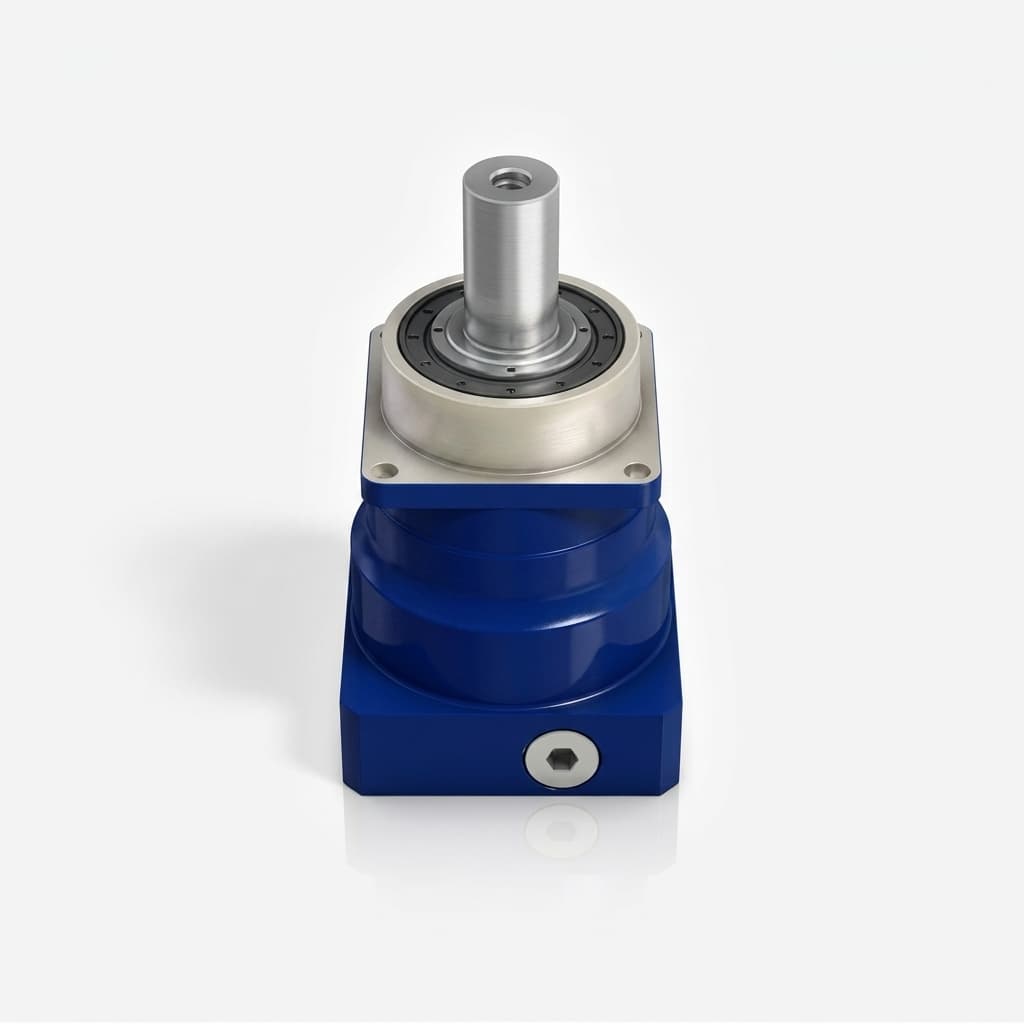
Backlash vs Repeatability: How to Set Acceptance Criteria Before PO
Buyer-side method to separate backlash and repeatability, lock test protocols, and release PO with measurable acceptance evidence.

Flange vs. Shaft Output Planetary Gearheads: Torsional Stiffness, Space, and Cost Trade-offs
Compare flange vs shaft output planetary gearheads for stiffness, space, and BOM cost. Use the checklist to choose the right OEM servo gearbox.