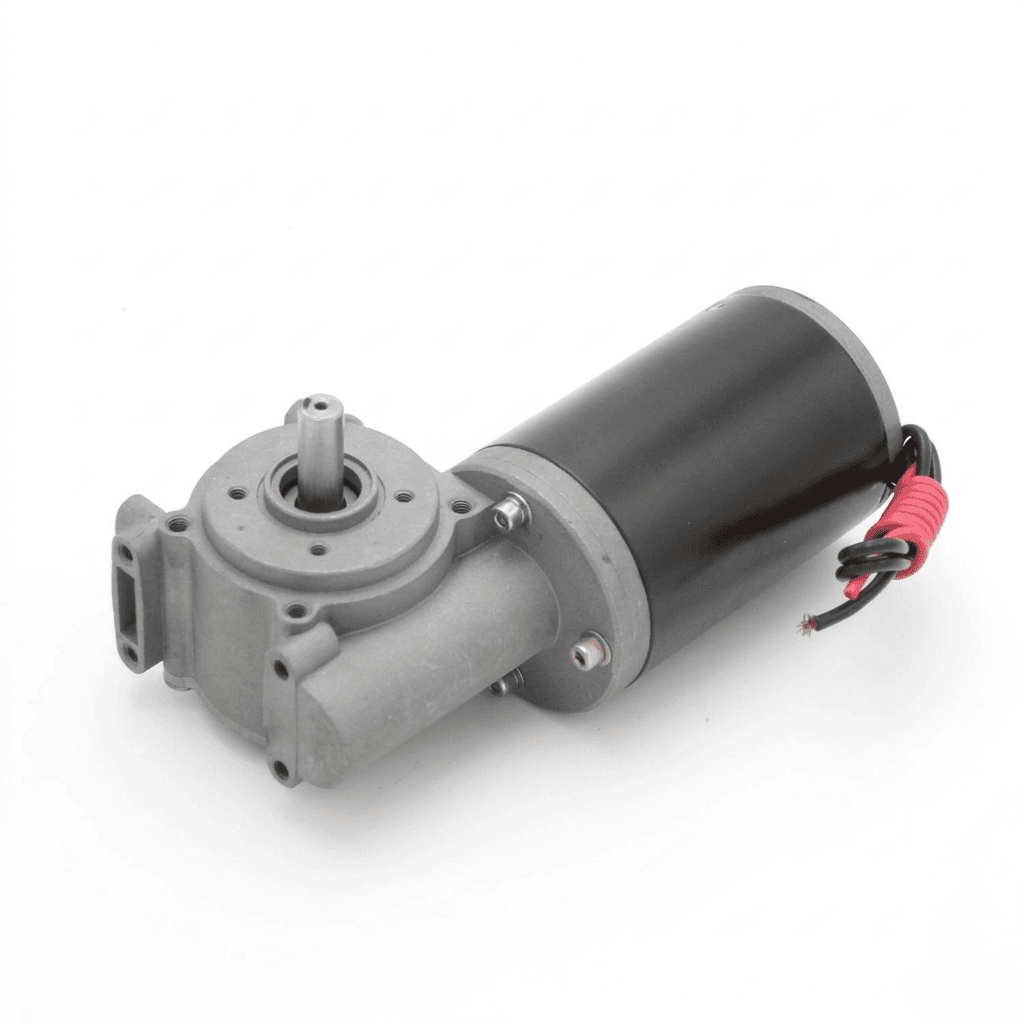
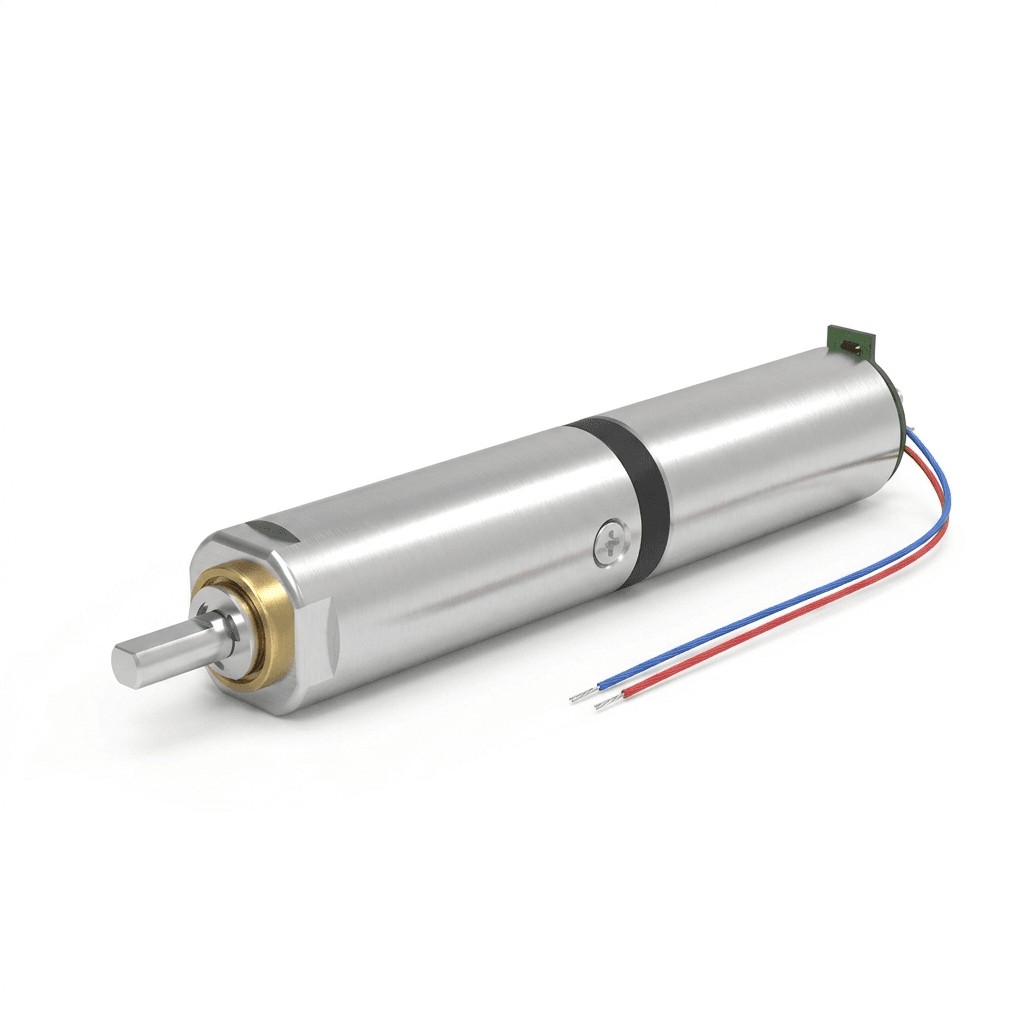
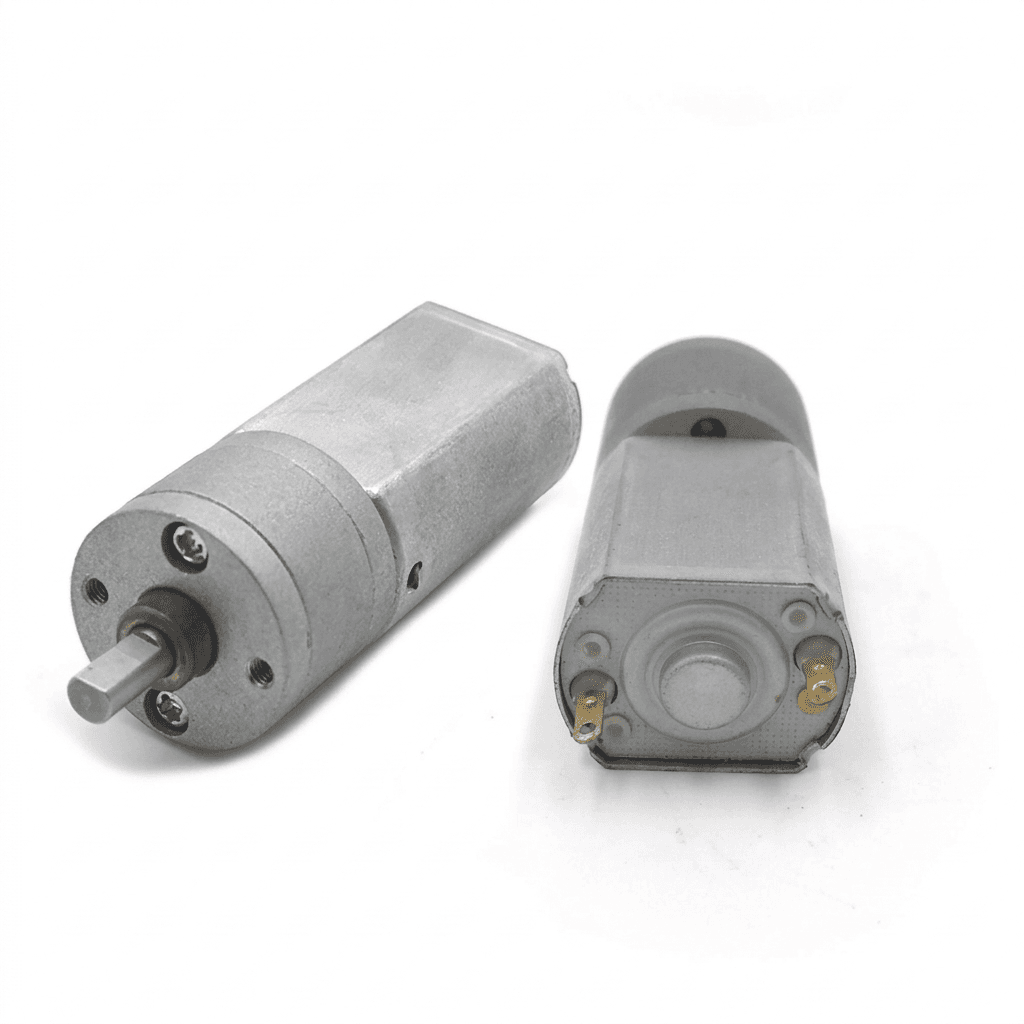
| 12V 37D benchmark class overview | Pololu 12V 37D metal gearmotor category | 2026-10-07 | Used for ratio span, no-load speed spread, recommended continuous/instantaneous load guardrails, and 24V sibling path with about half current draw. |
| Representative 10:1 electrical and speed point | Pololu #4748 technical specs | 2026-10-07 | Provides 12V vs 6V sensitivity values for no-load speed, current, stall current, and power context. |
| Multi-ratio 37D dataset and curves | Pololu 37D datasheet (Rev 1.2) | 2026-10-07 | Supports ratio-dependent trend assumptions and highlights stall-region caution for screening logic. |
| DOE standards map + Subpart boundary + 2027 compliance milestone | DOE Electric Motors page | 2026-10-07 | Used for official standards/test-procedure references, Subpart B/X/Z separation, and the June 1, 2027 compliance date marker. |
| Covered-motor criteria boundary text | 10 CFR 431.25 (eCFR) | 2026-10-07 | Used to capture the listed covered-class criteria (polyphase AC, 60 Hz, <=600 V, 1-500 hp pre-2027 path). |
| Nameplate labeling trigger for covered motors | 10 CFR 431.31 (eCFR) | 2026-10-07 | Used to distinguish covered-motor labeling obligations from this 12V DC screening workflow. |
| EU low-voltage scope threshold | EU Commission LVD page | 2026-10-07 | Used for the 75-1500 VDC scope boundary and below-threshold consumer-goods note. |
| EU EMC obligations + certificate warning | EU Commission EMC page | 2026-10-07 | Used for equipment-level emission/immunity obligations and warning that voluntary certificates are not recognized proof of compliance. |
| Latest rotating-machine rating/performance standard boundary | IEC 60034-1:2026 Webstore page | 2026-10-07 | Used to update the standards boundary: IEC lists IEC 60034-1 as an international standard with publication date 2026-03-13, edition 15.0, ICS 29.160.01, and stability date 2027. |
| Duty-cycle terminology for RFQ translation | Parvalux duty cycle guide referencing IEC duty designations | 2026-06-16 | Used to translate reversible 36 rpm and 55 rpm requirements into S1/S2/S3/S4/S5/S7/S8/S9/S10-style operating-cycle questions before supplier commitment. |
| IP code framework | IEC 60529 publication summary | 2026-05-23 | Used to structure environment-related guidance (dust/water ingress classes) in risk and RFQ sections. |
| Multi-stage transmission efficiency reference | Oriental Motor AC Motor Glossary | 2026-05-23 | Used to calibrate stage-dependent efficiency decay assumptions for spur-style paths. |
| Worm vs hypoid efficiency and ratio range reference | Oriental Motor Hypoid vs Worm Gears | 2026-05-23 | Used to frame high-ratio alternatives and efficiency tradeoffs in the comparison layer. |
| US industrial power-cost baseline | EIA Electric Power Monthly Table 5.3 | 2026-05-23 | Used for annual baseline and Jan-Mar 2026 monthly tariff sensitivity context (release dated 2026-05-21). |
| Stall-region caution statement | Pololu product technical notes | 2026-10-07 | Supports the guardrail that sustained operation near stall should not be used as procurement baseline. |
| Direct 36RPM 12V reversible listing | Jaycar YG2734 36RPM 12VDC Reversible Gearhead Motor | 2026-06-11 | Used for direct alias evidence: 36 rpm no-load, 12V nominal voltage, 1.38 A full-load current, 12 kg.cm full-load torque, 244:1 ratio, and 5 mm shaft data. |
| Direct 55RPM 12V reversible listing | Nowra Electronics YG2738 55RPM 12VDC Reversible Gearhead Motor | 2026-06-16 | Used for direct 55rpm alias evidence: 55RPM at load, 160RPM no-load, 50:1 planetary/orbital gearbox, 18 A full-load current, 75 kg.cm full-load torque, 6 mm shaft, and 12 mm shaft length. |
| 55 rpm no-load vs rated-speed counterexample | NFP NFP-5840-31ZY-S 31 mm reversible gear motor | 2026-06-16 | Used to show that a 12V 72:1 row can publish 55 rpm no-load but 42 rpm rated speed with <=0.6 A rated current and 8.5 kg.cm rated torque. |
| Industrial DC gearmotor reversal/current limits | AutomationDirect IronHorse DC Gearmotors User Manual | 2026-06-11 | Used for polarity-reversal wiring, reversible-design feature, 12V rows near 34/36/37 rpm, and the 125% rated-current limit note. |
| Brush DC gearmotor reversal and wear boundary | Anaheim Automation Brush DC Motor Guide | 2026-06-11 | Used for PMDC polarity-reversal basics and brush/commutator wear variables; service life remains model- and duty-specific. |
| Direct 70 rpm planetary/orbital listing | Nowra Electronics YG2732 70RPM 12VDC Reversible Gearhead Motor | 2026-06-20 | Used for direct 70 rpm planetary evidence: 70 rpm no-load, 12V nominal, 390 mA full load current, 2.1 kg.cm torque, 82:1 ratio, 4 mm shaft, and 49.3% max efficiency. |
| Second direct 70 rpm planetary listing | StepperOnline PA25-24126000-G64 70RPM 12V DC Gear Motor | 2026-06-20 | Used as a second accessible 70 rpm reference: 70 rpm rated speed, 94 rpm no-load, 12V, 250 mA rated current, 1.3 kg.cm rated torque, 64:1 planetary gearbox, CW/CCW rotation, and 6 mm shaft. |
| Direct 70 rpm industrial spur listing | RS PRO 258-8300 70 rpm 12V DC Geared Motor | 2026-06-20 | Used for industrial 70 rpm spur comparison: 70 rpm nominal, 12V DC, 20 Ncm max torque, 50:1 ratio, 5 mm shaft diameter, and steel construction. |
| Commutation system and brush wear limits | Maxon Support: Graphite brushes or Precious metal brushes | 2026-06-20 | Supports the recommendation to separate precious metal brushes from graphite brushes for start-stop, peak-current, and reversed-operation duty. |
| Motor EMI suppression wiring | Pololu motor-noise application note | 2026-06-20 | Used for the 0.1 uF non-polarized ceramic capacitor recommendation across motor terminals and from terminals to case in bidirectional brushed motor control. |
| Plug-reversal current transient boundary | MPS DC motor input-capacitor application note | 2026-10-07 | Used to explain that rapid deceleration can return motor energy to the supply. The note is application-specific; it does not establish a universal reversal current or timing limit. |
| H-bridge limits: L298N vs DRV8871 | ST L298 and TI DRV8871 official datasheets | 2026-10-07 | Used to compare device-specific voltage-drop, current, and thermal limits. TI’s 3.6 A DRV8871 figure is a peak rating; board-level continuous capability depends on thermal design and operating conditions. |